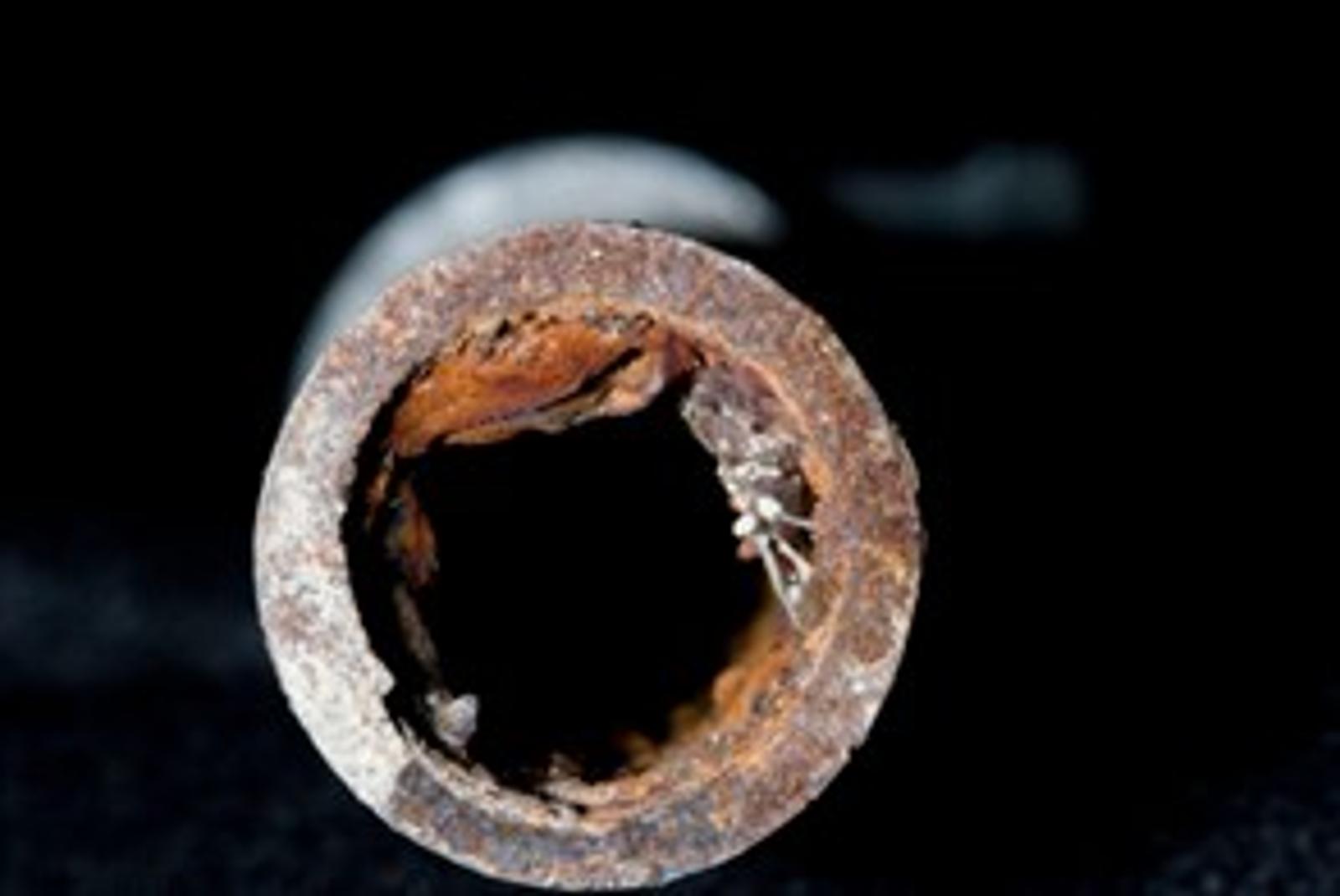

What Zinc Orthophosphate Actually Does
Zinc Orthophosphate is a blended corrosion inhibitor — typically zinc sulfate + phosphoric acid + orthophosphate compounds — supplied as a clear, acidic solution at pH 2–3, with total phosphate (as PO₄) between 18 and 30 % and zinc content between 1 and 10 %, depending on the formulation.
When dosed continuously into the distribution network at a target residual of 0.5–3.0 mg/L as PO₄, ZOP forms a thin, stable, passivating film — usually 1–10 µm thick — on the inner walls of pipes and fixtures. This film physically separates the pipe wall from the bulk water:
- On lead service lines, it precipitates as hydroxypyromorphite (Pb₅(PO₄)₃OH) and hopeite (Zn₃(PO₄)₂·4H₂O) — both extremely low-solubility minerals that lock lead in place.
- On copper pipes, it forms a phosphate-rich layer that suppresses cupric ion release, helping utilities stay below the 1.3 mg/L Cu action level.
- On cement-lined ductile iron and concrete pipes, the zinc fraction generates a zinc carbonate (ZnCO₃) film that protects the cement matrix from calcium leaching and surface degradation.
Different Zn:PO₄ ratios (typically 1:3 to 1:10) are selected based on raw water alkalinity, pH, dissolved inorganic carbon, distribution materials, and the 90th-percentile lead target the utility must achieve.