
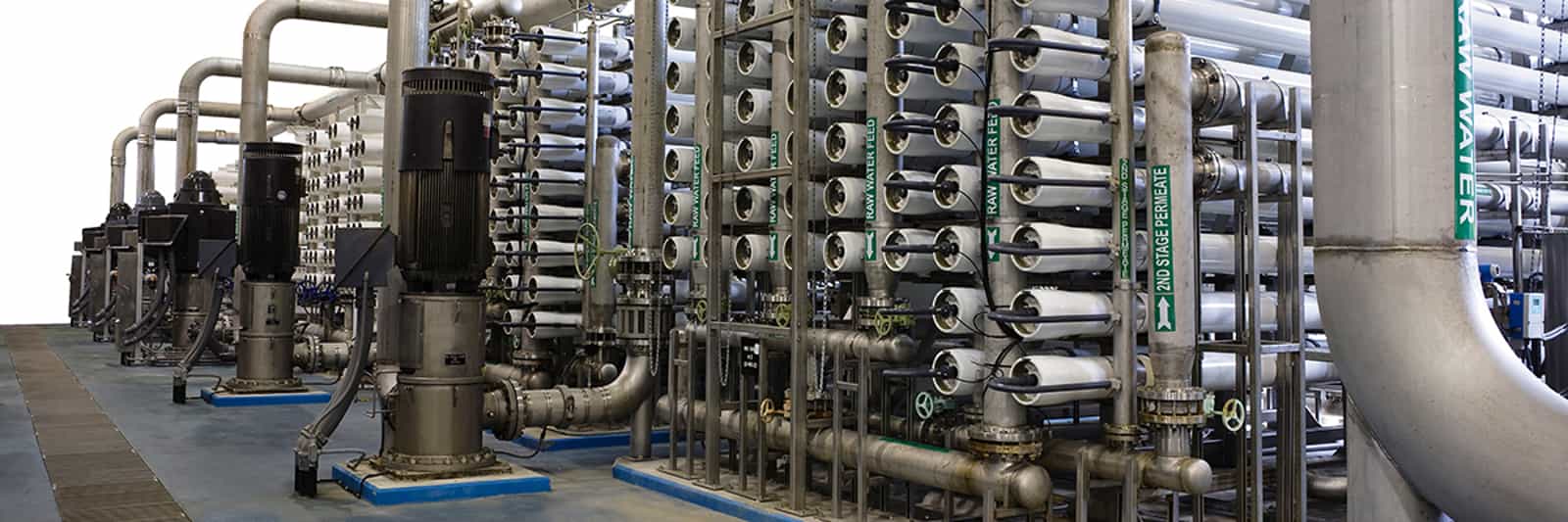
Reverse osmosis (RO) is the gold standard for producing high-purity water — but RO membranes are also among the most chemistry-sensitive components in any water treatment facility. Calcium and silica scale, biofouling, oxidative damage from residual chlorine, and pH excursions can each shorten membrane life from years to months. Effective RO operation depends entirely on the quality of its pretreatment chemical program.

LMI metering pumps have been designed specifically for reverse osmosis applications for more than 40 years. From small commercial RO skids to large industrial and municipal desalination trains, LMI delivers the dosing precision required to protect membranes, optimize recovery, and minimize total cost of ownership.

How RO Works (and What Can Kill a Membrane)

RO uses a semipermeable membrane to remove ions, molecules, and large particles from water under pressure. The rate of passage through the membrane is governed by pressure, concentration, and temperature of the molecules on each side. RO does far more than remove salt: it also rejects bacteria, dissolved organics, viruses, and most contaminants of regulatory concern — including PFAS.

Four failure modes shorten membrane life:

  • Scale formation
    Calcium carbonate, calcium sulfate, and silica precipitate on the membrane surface as feedwater concentrates. Antiscalant dosing prevents this.
  • Oxidative damage
    Free chlorine destroys thin-film composite (TFC) membranes; even 1 ppm-hour of exposure can cause permanent damage. Dechlorination is mandatory.
  • Biofouling
    Bacteria and biofilm reduce flux and increase pressure drop. Periodic biocide / shock chlorination + CIP is required.
  • pH excursions
    Out-of-spec pH reduces salt rejection and can damage membranes. Continuous pH adjustment maintains the optimal operating window.

The RO Pretreatment Chemical Program

Chemical

Function

Why LMI

Antiscalant (phosphonate / polyacrylate)

Prevents CaCO₃, CaSO₄, silica scaling

1000:1 turndown matches variable recovery rates

Sodium bisulfite (SBS)

Dechlorination upstream of membranes

AUTOPRIME handles off-gassing reliably

Sulfuric acid / HCl

pH reduction to prevent CaCO₃ scaling

PVDF and 316SS liquid end options

Sodium hydroxide

pH increase for boron rejection / post-treatment

High-pressure capability for inline injection

Sodium hypochlorite (CIP only)

Biofouling control during membrane cleaning

AUTOPRIME prevents loss of prime

CIP detergents / sanitizers

Membrane cleaning cycles

NSF certified


Why LMI Is the RO Industry Standard

LMI offers multiple liquid-end materials to match the full range of RO chemicals — polypropylene (PP), polyvinylidene fluoride (PVDF), and 316L stainless steel — ensuring full chemical compatibility across the pretreatment train.

  • ±3% accuracy — maintains stable antiscalant and dechlorination chemistry.
  • External pacing (4-20 mA + pulse) — proportional dosing tied to permeate flow or feedwater conductivity.
  • AUTOPRIME™ liquid ends — engineered for off-gassing chemicals like sodium bisulfite and sodium hypochlorite.
  • Calibration assist and totalizers — essential for FDA-regulated, pharmaceutical, and audited industrial sites.
  • NSF 61 certification — for RO systems producing potable water.
  • Rugged design — NEMA 4X / IP-65 enclosures for outdoor RO skid installation.